
The System Is Being Weaponized This Way [Part 2]
From Designed Neglect to Active Assault on Caregivers and Elders

“This is Part 2 of a two-part series. Part 1, ‘The System Is Designed This Way,’ explains how our care system was built to burn out caregivers and abandon elders.”
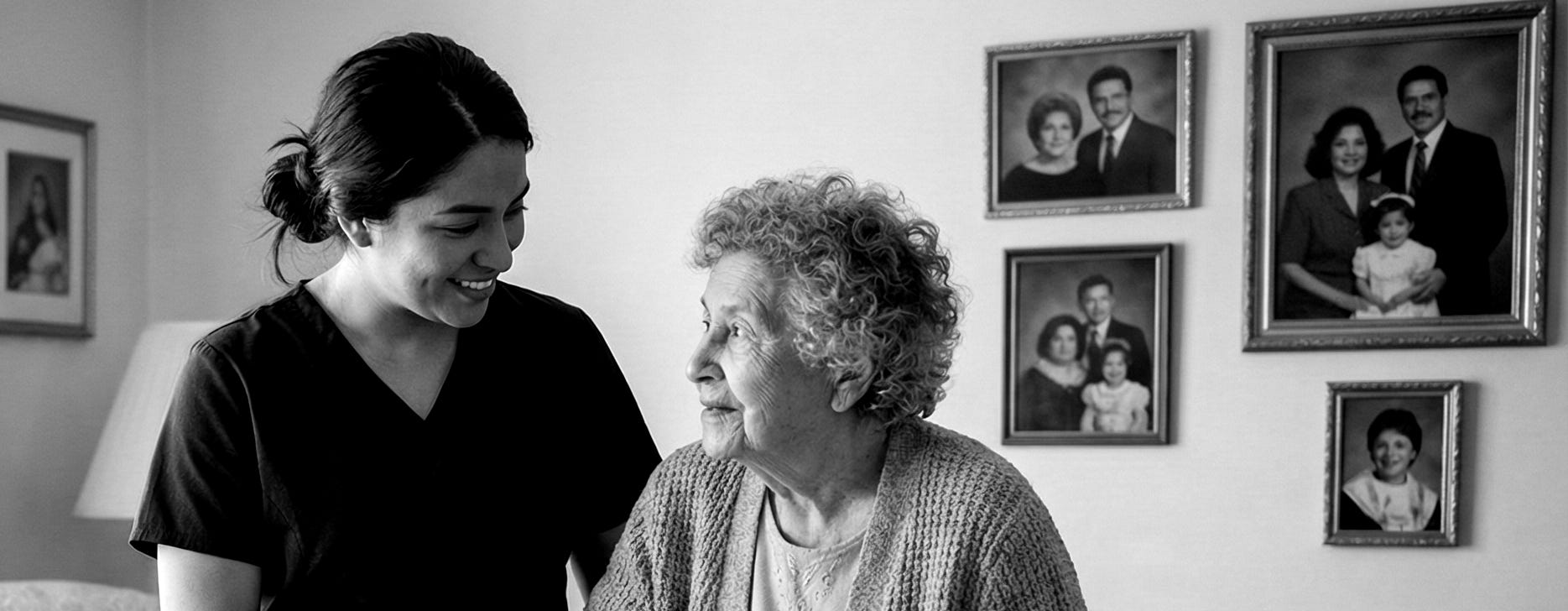
The system was not an innocent accident in my first piece. It was designed to undervalue care work, to exhaust caregivers, and to treat elders as line items rather than human beings. That alone would be an indictment enough.
But what is happening now goes further.
We have crossed a threshold from passive neglect to active assault. The Trump administration is not merely inheriting a rigged system; it is weaponizing that system — turning every existing weakness into a tool of extraction, punishment, and abandonment aimed at caregivers, patients, and elders.
This is what weaponization looks like.
From Designed to Weaponized
To design a system this way is to build in predictable harms: underfunded Medicaid, unpaid family caregiving, racialized exclusion from labor protections, and an eldercare “market” that profits from frailty.
To weaponize a system is something more precise and more sinister.
Weaponization means:
Taking those pre-existing structural failures
Identifying where care still survives — in wages, regulations, public programs, immigrant labor, community infrastructure
And deliberately attacking those remaining sources of protection so that profit and power can flow even more freely upwards.
You can see the shift when you track specific choices. Not “inevitable tradeoffs.” Not “tough decisions.” Choices.
Choices to trade nursing home safety standards for campaign cash.
Choices to pull minimum wage and overtime out from under 4 million home care workers.jayapal.house+1
Choices to slice nearly a trillion dollars out of Medicaid while calling it “efficiency.”healthjournalism+1
Choices to shut down respite programs and navigation supports that made caregivers and elders even remotely visible in federal policy.[ncoa]
Choices to go after the immigrant workers who hold the system together at 3 a.m. in someone else’s bedroom.[nytimes]
Choices to hand machine-learning tools the power to decide which elders get care and which elders get denial letters.kffhealthnews+1
In weaponization, harm is not an unfortunate byproduct; it is baked into the strategy.
What follows are seven “weapons” being deployed right now.
Weapon One: Cash for Carelessness
Start with nursing homes.
In 2024, the federal government finally adopted a minimum staffing rule for nursing homes: 3.48 hours of direct care per resident per day, including a registered nurse on-site 24/7. It was imperfect but historic — a line in the sand after decades of understaffing and preventable deaths.[aarp]
Under Trump, that line was put up for sale.
Nursing home executives funneled roughly $4.8 million into MAGA Inc., Trump’s super PAC, in August 2025.yahoo+1
They met with Trump at his golf club outside Washington to lobby against the staffing rule.newrepublic+2
Weeks later, the administration stopped defending the rule in court, then formally rescinded it via an Interim Final Rule in December 2025.duanemorris+1
AARP and other advocates have been blunt: by rolling back minimum staffing standards, the administration has stripped away the only federal floor for how thinly human bodies can be stretched to meet human needs for 1.2 million nursing home residents.nytimes+1
The message is clear: elders’ safety is negotiable. Donations are not.
Weaponization here looks like this: turning regulation into a bargaining chip, trading away time at the bedside for time on the golf course.
Weapon Two: Wage Theft as Policy
Home care is one of the fastest-growing sectors in the country and one of the lowest-paid. That is not a coincidence; it is the residue of a Jim Crow–era compromise that excluded domestic and agricultural workers — overwhelmingly Black workers — from basic labor protections.[phinational]
An Obama-era rule finally extended minimum wage and overtime rights to home care workers employed by third-party agencies. These protections were fragile, but real.[phinational]
The Trump administration moved to strip them away.
In July 2025, the Department of Labor proposed a rule that would revoke those protections and restore the “companionship exemption,” removing federal minimum wage and overtime coverage from nearly 4 million home care workers.nelp+3
Rep. Pramila Jayapal and 100+ Members of Congress warned that this would destabilize “an already underpaid workforce” and harm more than 9 million older adults and people with disabilities who rely on home care to remain in their communities.jayapal.house+1
Worker advocates pointed out that 84% of these workers are women, 67% are people of color, and about one-third are immigrants — precisely the populations long relegated to exploitable care work.nelp+1
NPR summarized the stakes plainly: if the rule goes through, home care workers will again be legally required to do grueling, intimate, often dangerous work without guaranteed overtime pay.[npr]
Weaponization here means making poverty a condition of caregiving — reaching into the paychecks of those who bathe our elders, lift them into wheelchairs, and overnight them through confusion and incontinence, and saying: “You are where we will balance the books.”
Weapon Three: Austerity on the Backs of Elders
The so-called “One Big, Beautiful Bill” — the 2025 budget reconciliation package — is a masterclass in how to weaponize a ledger.healthjournalism+2
Key numbers:
Approximately $990 billion was cut from Medicaid over 10 years.kff+1
Roughly $187 billion was cut from SNAP, the nutrition program for low-income Americans, over that same period.[healthjournalism]
An estimated 10–11 million people are projected to lose health coverage, including over 1.3 million adults aged 65 and older, due to changes in registration and eligibility; millions more are “dually eligible” elders whose benefits are now at risk.seniorsleague+2
These aren’t abstract. They translate into:
States are reducing or eliminating home and community-based services (HCBS) — the supports that allow elders to bathe, dress, eat, manage medications, and avoid institutionalization.healthjournalism+1
Lower reimbursement rates for home care agencies already struggling with recruitment and retention, making it harder to find workers to cover basic shifts.[healthjournalism]
Stricter work requirements and red tape fall squarely on low-income elders and family caregivers navigating Medicaid while already working, disabled, or both.seniorsleague+1
Justice in Aging and other advocates have warned that these cuts will produce both coverage loss and avoidable deaths — including estimated thousands of additional deaths annually tied to delayed drug access and the delayed enforcement of staffing mandates.[healthjournalism]
Weaponization here is not subtle. It is the use of the budget to decide who gets care and who is quietly priced out of survival.
Weapon Four: Erasing Care from the Federal Imagination
If you want to understand what a country truly values, look not just at what it funds, but at what it names and maintains.
The Trump administration’s FY26 budget proposal takes a sledgehammer to the infrastructure that even acknowledges caregivers and elders as policy subjects:
Aging and Disability Resource Centers (ADRCs) – eliminated. These one-stop hubs helped people navigate long-term services and supports.[ncoa]
State Health Insurance Assistance Programs (SHIPs) – eliminated. These are the people on the other end of the phone helping elders figure out Medicare options.[ncoa]
Lifespan Respite Care Program – eliminated. The only dedicated federal program to give caregivers a break. Gone.[ncoa]
Low-Income Home Energy Assistance Program (LIHEAP) – eliminated, even though heating and cooling assistance is directly tied to preventable hospitalizations and deaths among elders.[ncoa]
CDC Injury Center – eliminated, including funding for falls-prevention efforts like the STEADI initiative, despite falls being a leading cause of fatal and nonfatal injuries among older adults.[ncoa]
The National Council on Aging warned that the budget “puts aging services at risk” and would severely weaken the Aging Services Network’s capacity to respond to elder needs.[ncoa]
To erase these programs is to erase the vocabulary with which caregivers and elders have made themselves visible in federal space. It is an administrative disappearance.
Weaponization here is about silencing: cutting the phone lines, closing the doors, ending the pilot projects and resource centers where caregivers’ realities once had a line item.
Weapon Five: Deporting the Hands that Hold the System Together
Immigrant labor is not incidental to eldercare. It is central.
Roughly 28% of direct care workers and about 32% of home care workers are immigrants. They are overrepresented on the night shifts, in rural areas, in the least desirable and most physically demanding roles.nytimes+1
Trump’s immigration crackdown — including decisions to terminate Temporary Protected Status (TPS) and step up enforcement — has been devastating for this workforce:
Nursing homes and home care agencies report sudden staffing gaps as workers avoid public spaces or disappear from payrolls out of fear.[nytimes]
One Massachusetts home care agency reported losing nine caregivers in a single wave and expecting to lose six more.[nytimes]
Industry leaders warn that existing shortages have become crises, with facilities unable to fill scheduled rotations and elders being left with fewer aides and longer waits.[nytimes]
Harvard health policy expert David Grabowski described the emerging conditions as “hazardous,” increasing risks of falls, dehydration, and other preventable harms for residents.[nytimes]
Weaponization here uses immigration policy as a pressure point: criminalize and expel the very workers who make long-term care function, then blame “labor shortages” when families can’t find help.
Weapon Six: Algorithms as Gatekeepers of Care
There is a particular cruelty in using the language of innovation to justify new forms of denial.
Beginning January 2026, about 6.4 million people in six states (New Jersey, Ohio, Oklahoma, Texas, Arizona, Washington) in traditional Medicare — not Medicare Advantage — are swept into a six-year pilot program called WISeR: “Wasteful and Inappropriate Service Reduction.” This is not a law passed by Congress; it is an administrative “demonstration” created by the Centers for Medicare & Medicaid Services (CMS) under its existing authority to test cost-saving models.
What WISeR does:
Introduces prior authorization to traditional Medicare for 17 outpatient procedures, such as certain skin and tissue substitutes, electrical nerve-stimulator implants, and knee arthroscopy.
Uses AI algorithms and third‑party “utilization management” vendors to help decide which services will be approved, delayed, or denied.
Effectively pays those vendors to reduce “waste” — a euphemism that, in practice, often means less care delivered, because their compensation is tied to averted Medicare spending.
Physicians, advocates, and lawmakers have raised alarms because prior authorization is already notorious in Medicare Advantage for delaying or denying medically necessary care. Senator Peter Welch, Senator Ron Wyden, and others have introduced legislation to block or constrain WISeR, warning that this CMS-driven experiment could put vulnerable seniors at risk.
Weaponization here operates in code. It outsources moral decisions to algorithms, with financial incentives aligned not with healing but with “averted expenditures” — i.e., with how effectively you can say “no” to elders.
Weapon Seven: Dismantling the Public Health Backbone
Caregiving does not happen in a vacuum; it rests on a public health infrastructure that tracks infections, injuries, environmental risks, and community-level trends.
The Trump administration’s approach to the Centers for Disease Control and Prevention (CDC) has been to treat it as overhead to be cut:
Demands for contract reductions of roughly $2.9 billion — more than one-third of CDC’s contracting budget.[nytimes]
Layoffs of about 2,400 employees, nearly one-fifth of the agency’s workforce, including experts in environmental health, injury prevention, and other domains where elder risk is concentrated.[nytimes]
Paired with the elimination of the CDC Injury Center and falls-prevention funding described above, these cuts are not just about “waste.” They are about disabling the capacity to even know what is happening to elders at scale.
Weaponization here is directed against knowledge itself: fewer surveillance systems, fewer experts, fewer mechanisms for translating data into interventions.
The Logic Behind the Weapons
When you step back, these are not disconnected moves. They share a coherent logic:
Care is a cost center, not a moral obligation.
If care cannot be monetized as profit, it should be minimized or offloaded onto families, unpaid labor, and charitable improvisation.Caregivers are expendable.
Their wages can be cut, their protections revoked, their immigration status weaponized — because the system assumes they are infinitely replaceable.Elders are burdens, not bearers of dignity.
In a market logic, elders who consume care without producing profit are tolerated only so long as their claims on public resources remain small and manageable.Complexity is a feature, not a bug.
Red tape, prior authorization, confusing eligibility rules, and the erosion of navigation supports are tools to ensure that only the most persistent and resourced can access what remains.
From a liberation theology lens, these policies are not neutral. They are forms of structural sin: the deliberate organization of our economic and political life so that some can flourish by consigning others to exhaustion, invisibility, and preventable suffering.
A Clarion Call: Naming the Weapon, Refusing Its Logic
If the system were merely “designed this way,” we could imagine fixing it with tweaks — better metrics here, a new pilot program there, a few more grants to caregiver support organizations.
But a weaponized system requires a different response.
It requires us to:
Tell the whole story out loud. Not just isolated regulations, but the pattern: donations for deregulation, cuts for tax breaks, deportations for discipline, algorithms for distance from responsibility.yahoo+4
Refuse the euphemisms. “Efficiency,” “flexibility,” “care at home,” “waste reduction,” “fraud prevention” — all must be interrogated against the lived reality of elders and caregivers on the ground.healthjournalism+2
Center caregivers as protagonists, not afterthoughts. The people whose wages are being cut, whose respite is being eliminated, whose immigration status is being weaponized, must be the ones driving the analysis and the response.jayapal.house+2
Name this as a moral emergency. Not a partisan disagreement. Not a policy debate among experts. A struggle over whether those who give and receive care are treated as disposable or as sacred.
In my previous piece, I argued that the system is designed this way. That was the diagnosis.
This moment demands that we go further:
The system is being weaponized this way. The question now is not whether we understand that fact. The question is whether caregivers, elders, families, congregations, and communities will organize as if it is true — and act accordingly.